
The Art of the Skin Track
We have all been there. Either chasing partners or being chased up an unnecessarily steep skin track at a pace that feels like punishment. Head down, breathing heavy, sweat pouring, tripping over your own skis as the track abruptly changes direction again and again. The group is stretched thin. Some partners are far ahead. Others are completely out of sight.
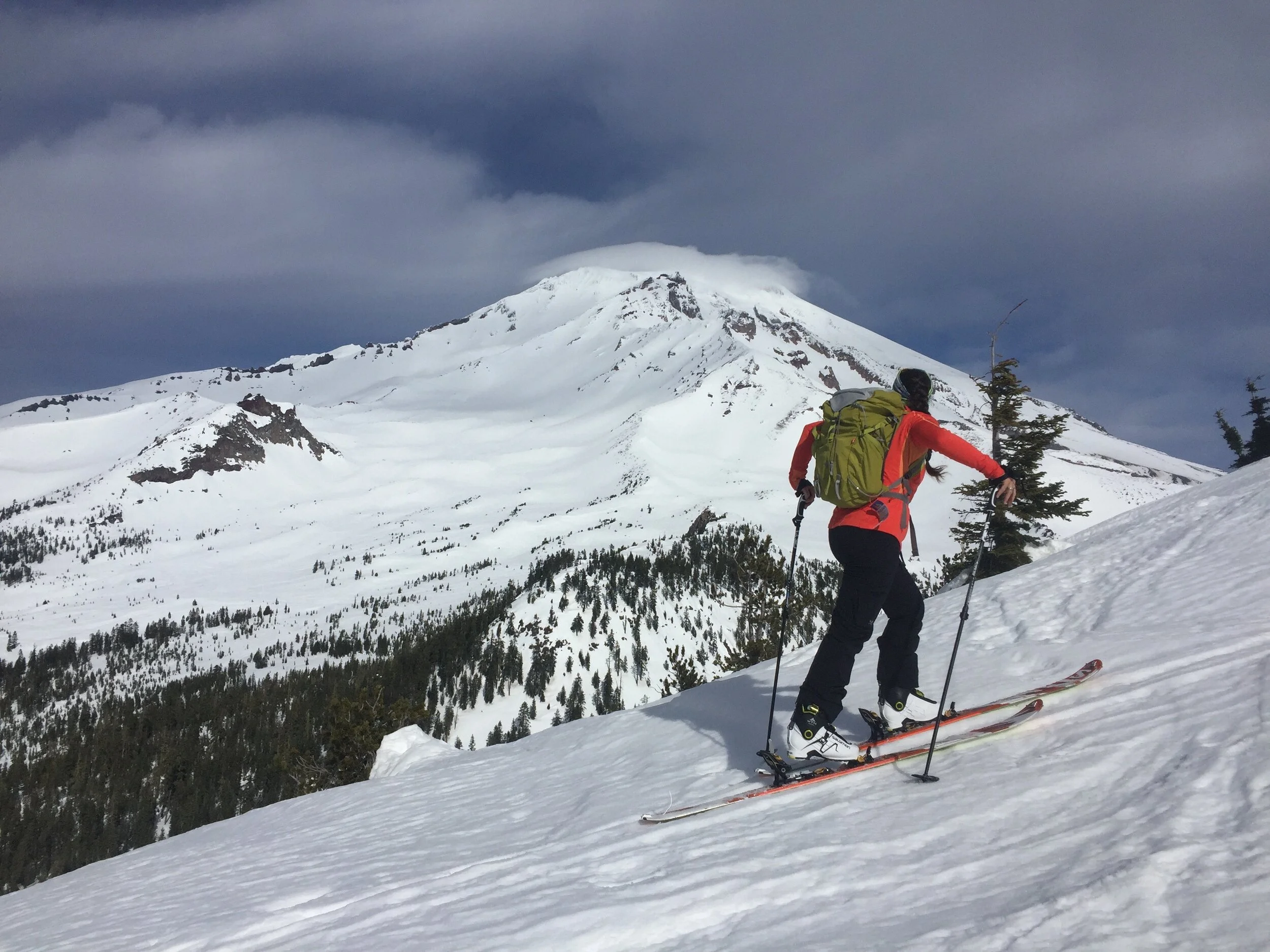
Ski touring in the Mount Shasta Backcountry
You finally reach the top of the first run and realize part of the group is already ready to drop in. They have already talked through the plan, chosen lines, and are moving in a way that prioritizes individual achievement over group safety and shared enjoyment. You are tired, slightly behind the conversation, unsure of the plan, and already thinking about opting for apres over a second lap before you have even made a single turn.
Ever wonder why you rarely see guided groups or experienced crews operating this way? How do they manage to get so much more skiing done and still return to the trailhead stoked and ready to do it again the next day, even though they appear to be moving at a relaxed, almost slow pace?
The internet probably does not need another kick-turn tutorial, but a reminder of the fundamentals of skinning might be helpful.
Good skinning starts with intention. From a track-setting standpoint, traveling uphill should not be exhausting or overly stressful. You should not feel like a human sacrifice while touring in the backcountry. A well-set skin track conserves energy, keeps the group together, and helps everyone stay sharp for decision-making throughout the day.
Patience matters. Developing efficient skinning technique takes time and a willingness to refine how you move uphill. It takes years and thousands of hours to build the experience that allows you to move smoothly across different terrain and snow conditions. Unless you are racing or training in very low-risk environments, the skin track should not be a pain cave. On days that demand attention to route finding, avalanche problems, or long mileage, smooth uphill travel is a safety tool. Arguably, the safer and more fun your tours are, the more you’ll want to get out, and the faster your touring skills will develop.
A professional-quality skin track follows the safest available terrain, avoiding dangerous exposure to long falls, avalanche paths, and runouts. It maintains a relatively low angle and minimizes sharp kick turns. Think long, rounded traverses that flow naturally up the slope. When changes in direction are necessary, look for lower-angle spots to make those moves easier and more stable. Draw a beautiful line up the mountain, not just the line you hope to ski down.
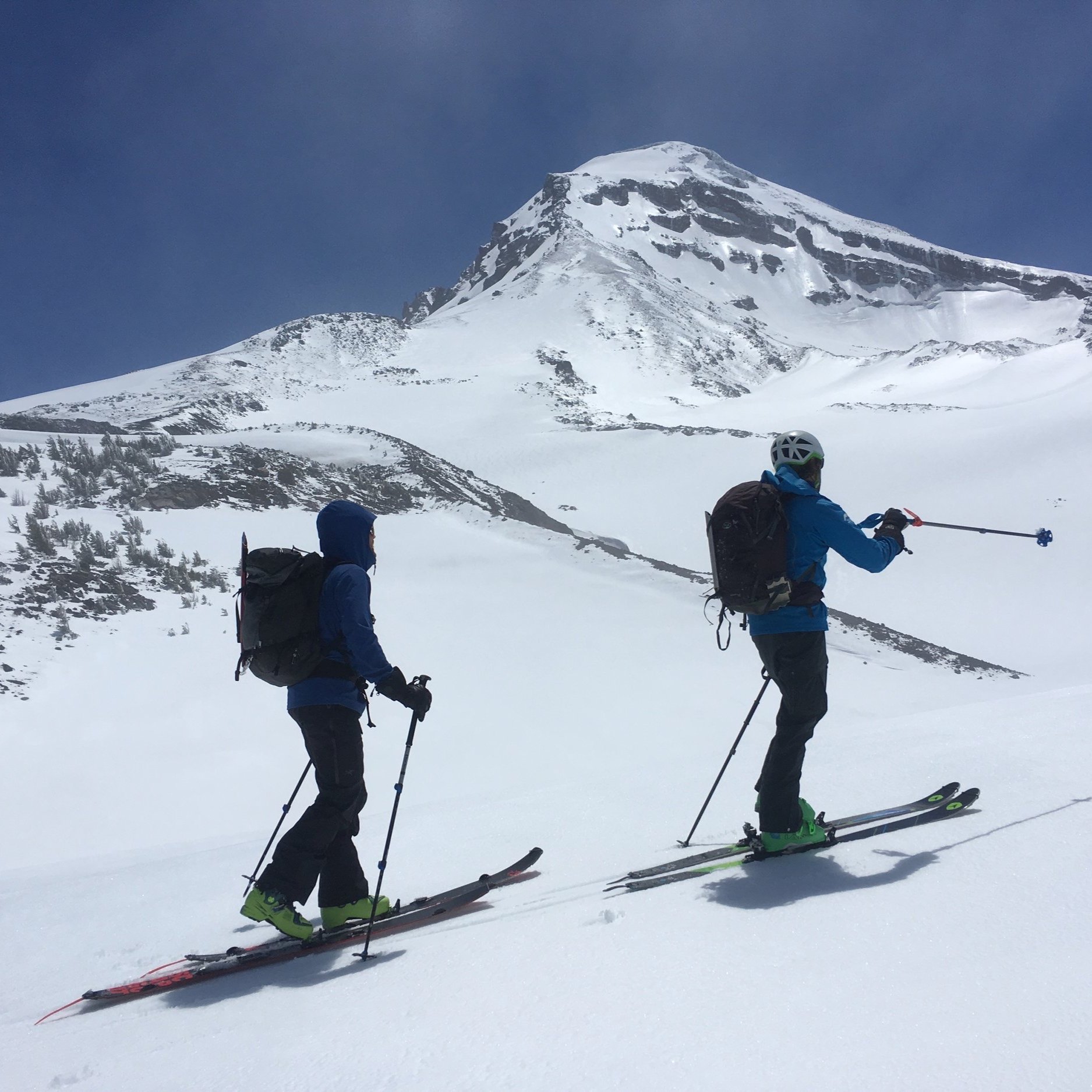
Adam Zok & Greg Cunningham on a single day “Three Sisters Traverse”
Swiss research and long-standing alpine travel observations suggest that the most efficient uphill angle for human-powered ascent is roughly twelve to fifteen degrees. Staying near this range reduces energy expenditure and allows for more consistent pacing over long climbs. Steeper tracks may save distance, but they often cost more in fatigue, focus, and group cohesion.
Pole technique plays a bigger role than many skiers realize. If you use pole straps, use them the way Nordic skiers do. Keep your arms extended with shoulders engaged rather than relying on bent elbows and triceps alone. Keep your hands relatively low and plant your poles at or just behind where the opposite heel lands. This should feel like natural locomotion rather than erratic stomping and stabbing.
When slopes get steep or icy, shorten your stride to about the length of your boot and slow the tempo. A brief rest step between strides helps keep your weight over the heel piece, where traction is greatest, and allows the plush of the skin time to bond with the snow. Standing tall without hinging at the waist further improves balance and traction.
Ski crampons can be a valuable tool and, at times, a necessity. They can turn stressful, exhausting skin tracks into calm and manageable climbs. At the same time, overreliance on crampons can become a crutch that limits the development of efficient technique. Use them when conditions demand it, but continue refining your fundamentals.
Dial back the pace a little and enjoy the skin track. You will spend more than seventy-five percent of your tour going uphill. Set a pace that allows conversation. This preserves energy for the descent and keeps the group together, so decisions about route finding, avalanche hazards, and line selection are made collectively. Take short breaks every hour at safe, comfortable spots along your route that allow the team to regroup if needed, eat, drink, and make terrain, snowpack, and avalanche observations together. When everyone moves together, everyone has buy-in.

Ski touring above Hidden Valley on Mount Shasta/Shastina
There is a time and place for steep, hard-charging skin tracks. Most days in the backcountry, however, a safe and efficient track is where the real magic happens. Better skiing, longer days, stronger partnerships, and a better overall experience in the mountains all start with how you move uphill.
A good skin track does not just get you to the top. It sets you and your team up for a better day on every level.
Train Smarter for the Mountains You Love
Casaval Personal Training is more than a typical personal training or coaching service. I pair evidence based and science backed training with over twenty years of professional mountain guiding experience to help athletes move efficiently, make better decisions, and enjoy stronger, longer, safer days in the mountains.
If you want to improve how you move uphill, how you manage effort, and how you show up for long days in complex terrain, a conversation is the right place to start.
Have questions about skinning technique, uphill efficiency, or mountain preparation? Leave a comment below and start the conversation.